The Peanut Line
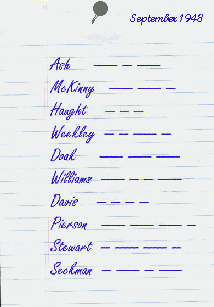 |
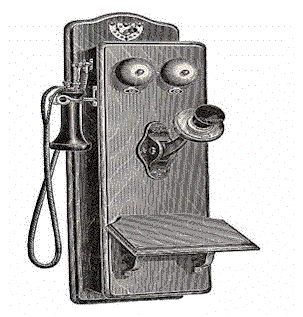
Cryptogram ? Morse code? No, the illustration on the left is an example of a list that could have been found on the wall next to the telephones of Wilbur in years gone by. It is, in effect, a phonebook. The phones in use there into the 1960’s were of the “crank” type, and the call was initiated by cranking a series of rings. Unlike some small town systems, there was no switchboard or operator and all the phones were continuously connected. The rings were referred to as “longs” and “shorts.” For example, Ash’s phone ring (in the example) was a long, a short, and a long. Since the phones were all connected, the ring would be heard in every home when any call was made. Consequently, you would have to listen to the sequence of rings to determine whom the call was for. This also, obviously, alerted everyone else on the line that a call was being made and often made the person making the call the victim of eavesdropping. It also allowed an early form of three-way or conference calling. |
 |
It
is not known when this system was originally built, but it is known to
have been in operation as early as the 1920's. This “peanut line,” as some in the community referred it to, was nevertheless the only means
of communication from neighbor to neighbor and served well.
It covered an area as far down Jefferson Run as the Berkley Smith
home. The Smith family had access to another telephone system on
which they could contact people in Centerville (later Alma.)
Therefore they could relay messages when people in Wilbur needed to
contact the doctor
who lived in Centerville.
The lines were maintained by the men in the community, and after a summer storm or winter snow, it was a routine thing for them to have to go searching for where the “line was down.” It normally would be found to have been a tree or tree limb falling across the line, or simply the weight of ice and snow accumulated on the wires, that was causing the problem. On this system it was common to have a switch or other mechanical means of disconnecting the outside line from the telephone during summer electrical storms. This was to keep lightning from "running in" on the phone lines and damaging the telephone or starting a fire. The "peanut line" was maintained and operated until the early 1960's when the C&P Telephone Company extended lines into Wilbur allowing for direct communications with the outside world. |
|
|
|
|